Marni
An enduring retail philosophy rooted in site-specificity, sculptural form and a contemporary aesthetic.
Marni’s global retail presence is the result of a longstanding creative collaboration between the Castiglioni family and Sybarite Co-Founders Simon Mitchell and Torquil McIntosh. Over more than a decade, Sybarite led the design and rollout of over 250 Marni stores worldwide, spanning window installations, monobrand boutiques, and flagship locations across London, New York, Tokyo and Los Angeles.
- Key Info
-
- Location
- Worldwide
- Client
- Marni Group S.r.l.
- Services
- Interior Design, Retail Design, Rollout Strategy, Fixture Design, Visual Merchandising
- Year
- 2002 - 2015
- Typology
- Corners, Shop-in-shops, Freestanding Malls, Flagships
- Area
- 20 m2 - 2,000 m2
- Photography
- Andrea Martiradonna, Bill Wisser, Butsou Lai, Donato Sardella, Jimmy Cohrssen, Nacasa, Paul Warchol, Richard Davies, Silvio Posada
- Press
-

- Location
- Worldwide
- Client
- Marni Group S.r.l.
- Services
- Interior Design, Retail Design, Rollout Strategy, Fixture Design, Visual Merchandising
- Year
- 2002 - 2015
- Typology
- Corners, Shop-in-shops, Freestanding Malls, Flagships
- Area
- 20 m2 - 2,000 m2
- Photography
- Andrea Martiradonna, Bill Wisser, Butsou Lai, Donato Sardella, Jimmy Cohrssen, Nacasa, Paul Warchol, Richard Davies, Silvio Posada
- 0
- Stores
- 0
- Countries
- 0
- Cities
design vision & process
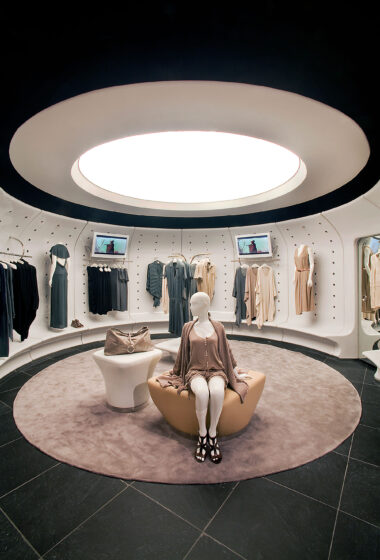
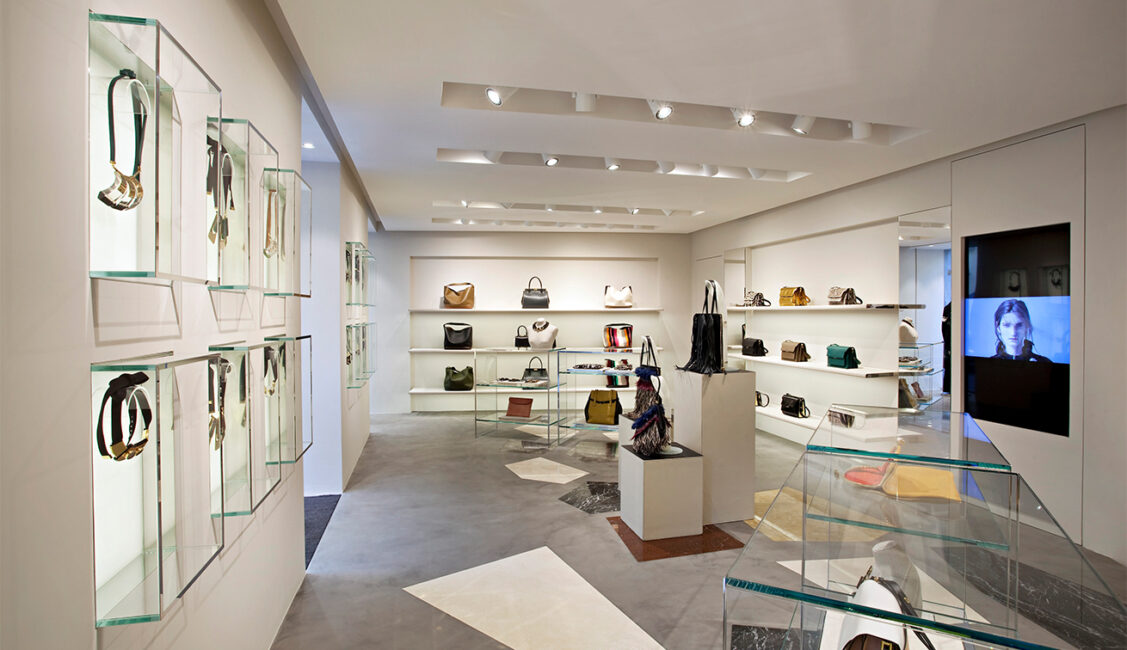
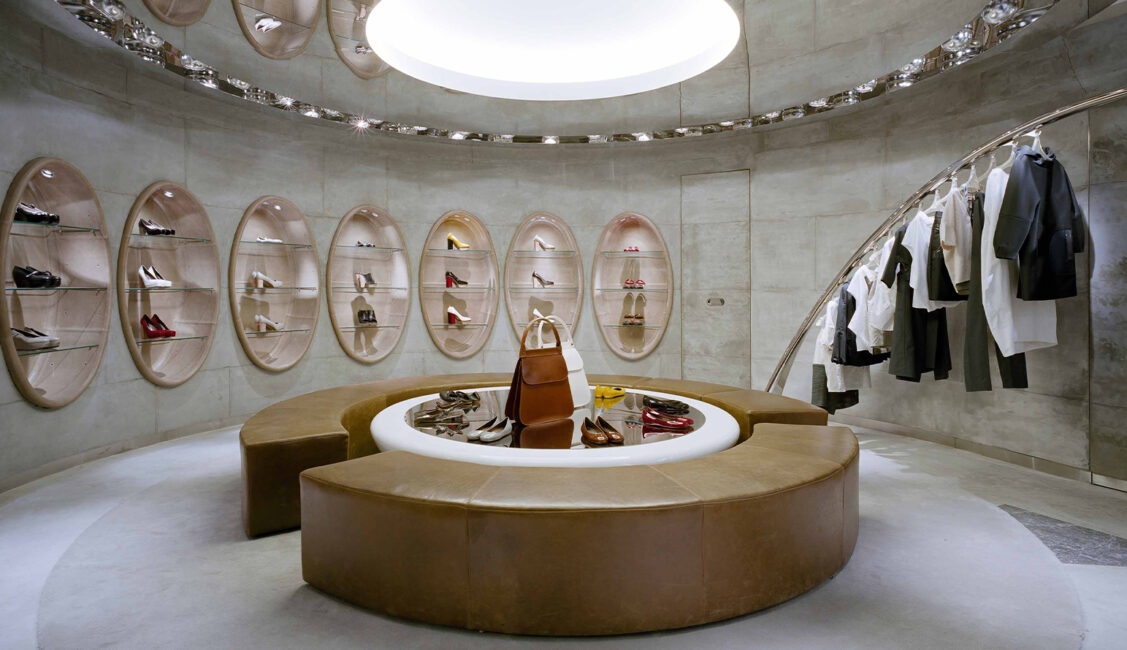
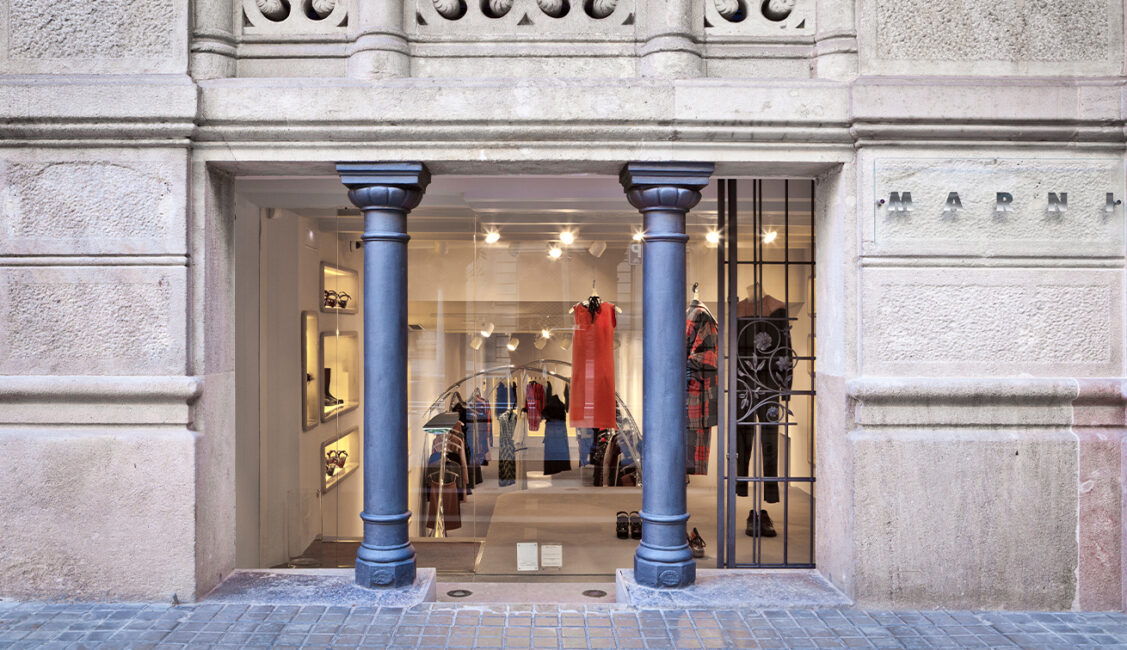
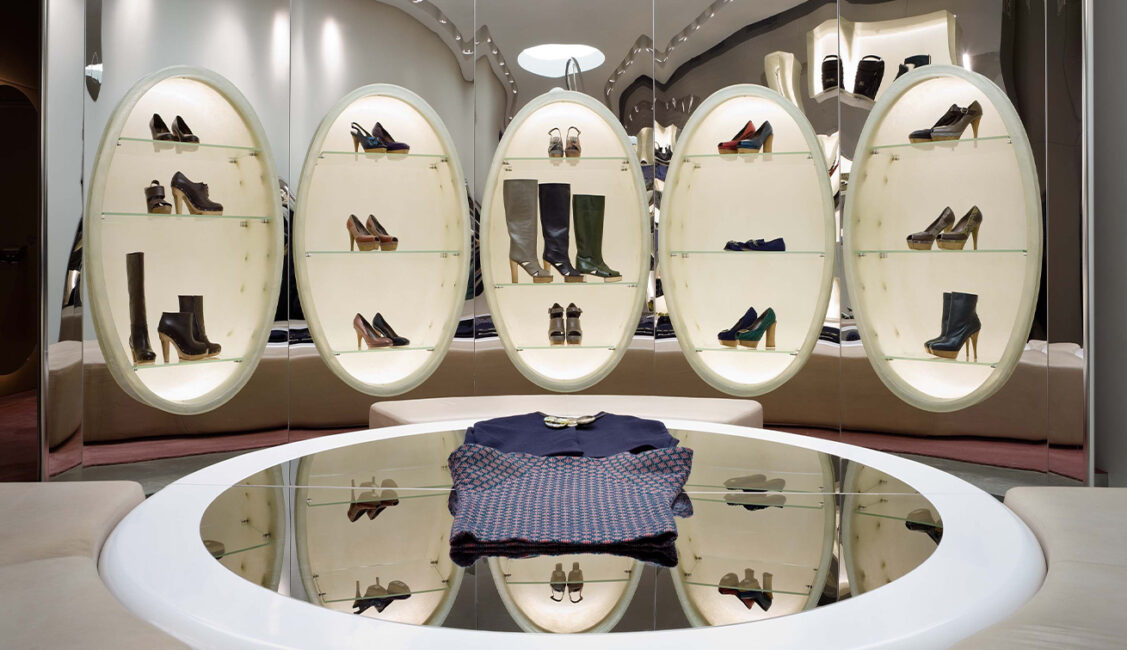
Rooted in sculptural curves, clean lines and a contemporary sensibility, the Marni retail concept established a recognisable architectural language while allowing each store to respond intuitively to its geographical and cultural context.
The result was a cohesive global presence defined not by uniformity, but by character.
“We wanted to create a design for Marni where you didn’t need to read the name above the door.” — Torquil McIntosh, Co-Founder, Sybarite
GLOBAL PHILOSOPHY, LOCAL EXPRESSION
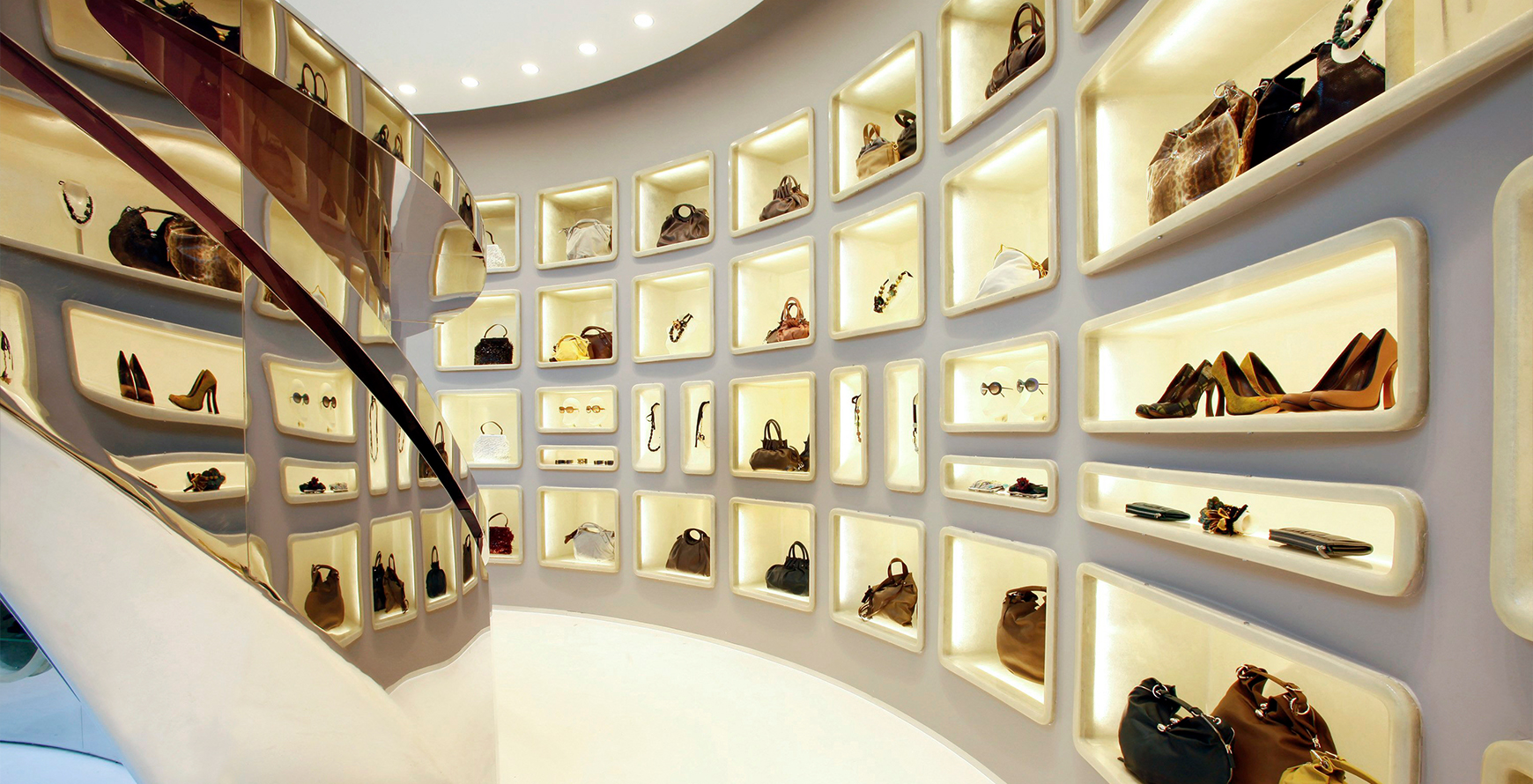
From the outset, Marni and Sybarite shared an ambition to challenge the conventions of homogenous retail rollouts. Rather than imposing a rigid template, each store was conceived as a site-specific interpretation of the brand — infused with local references, cultural cues and subtle narrative gestures.
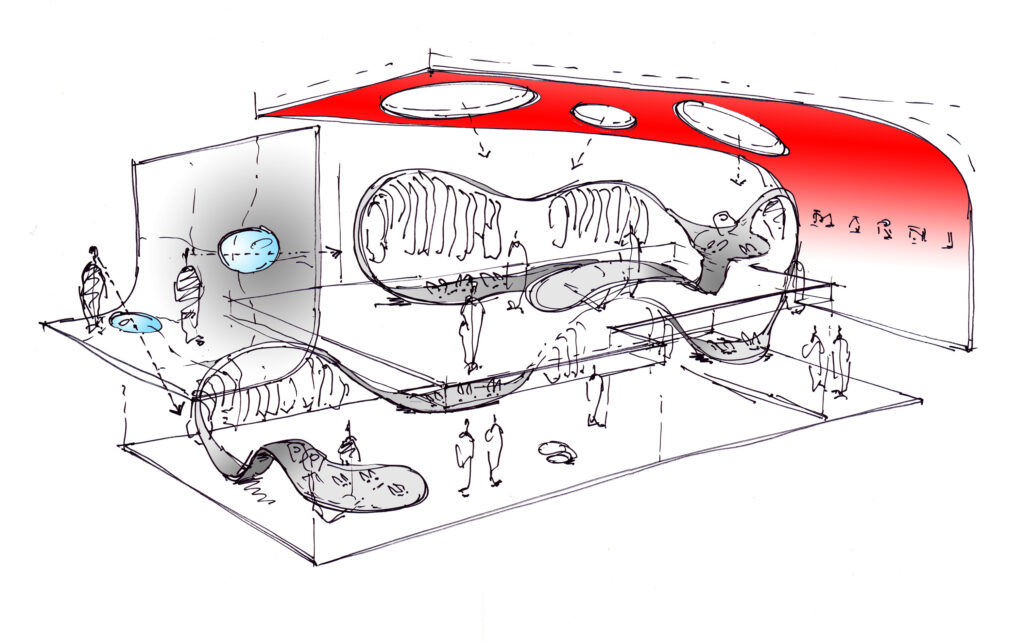
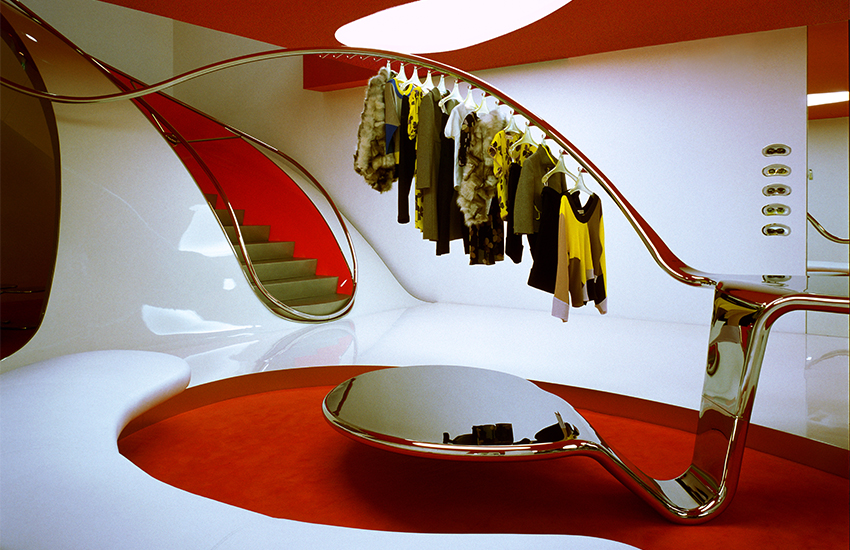
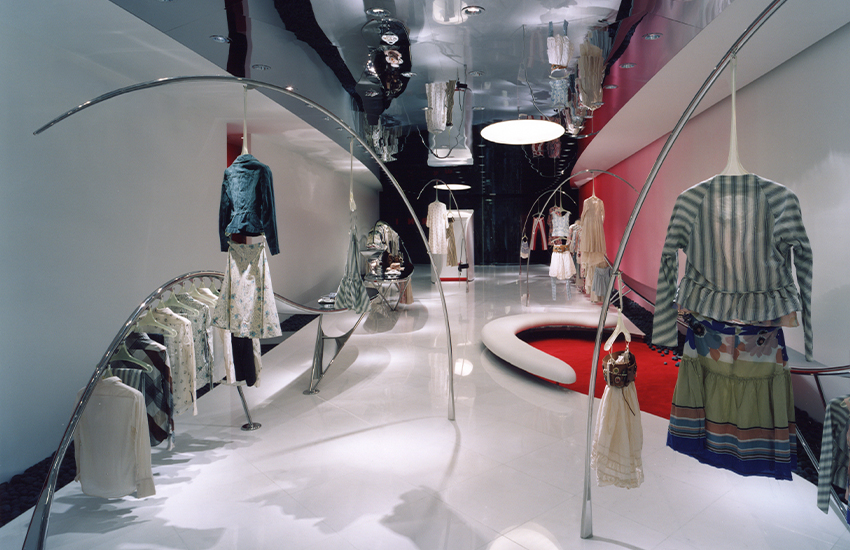
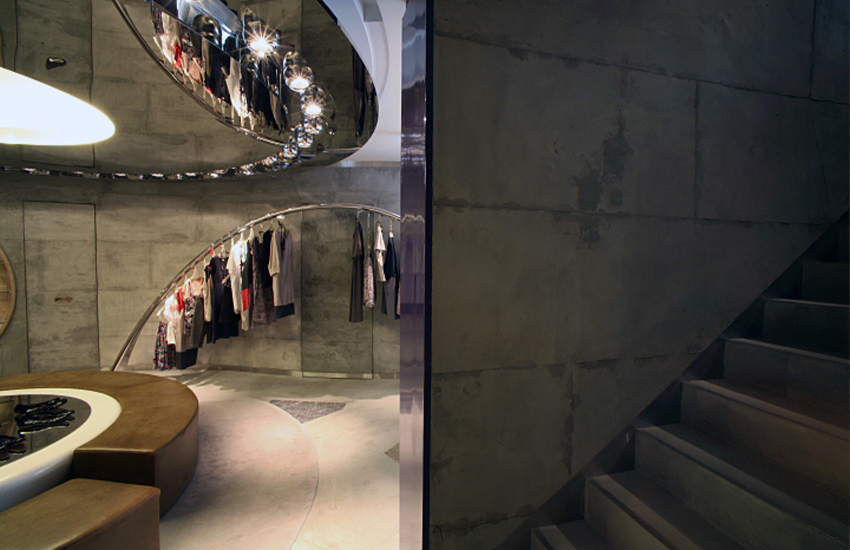
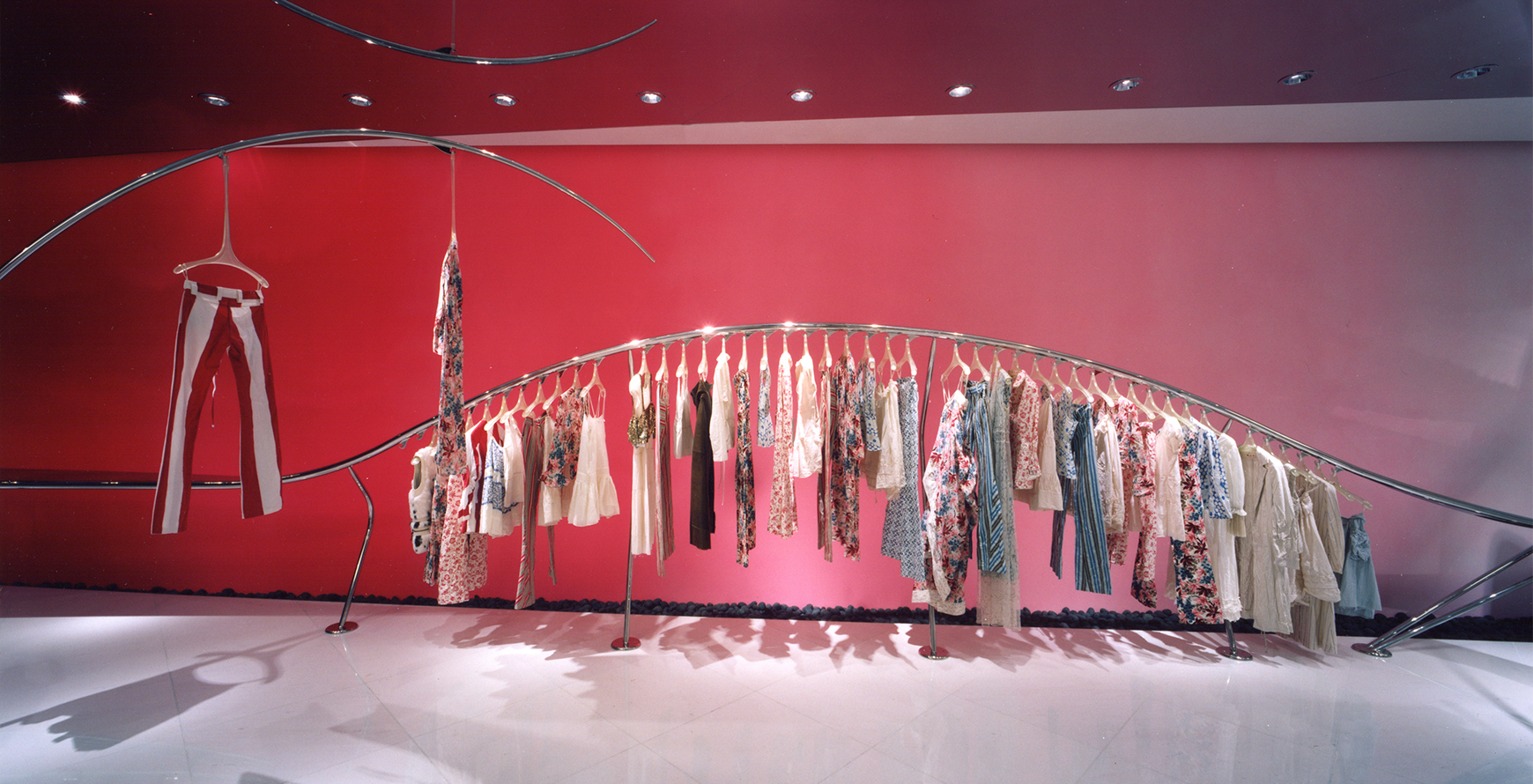
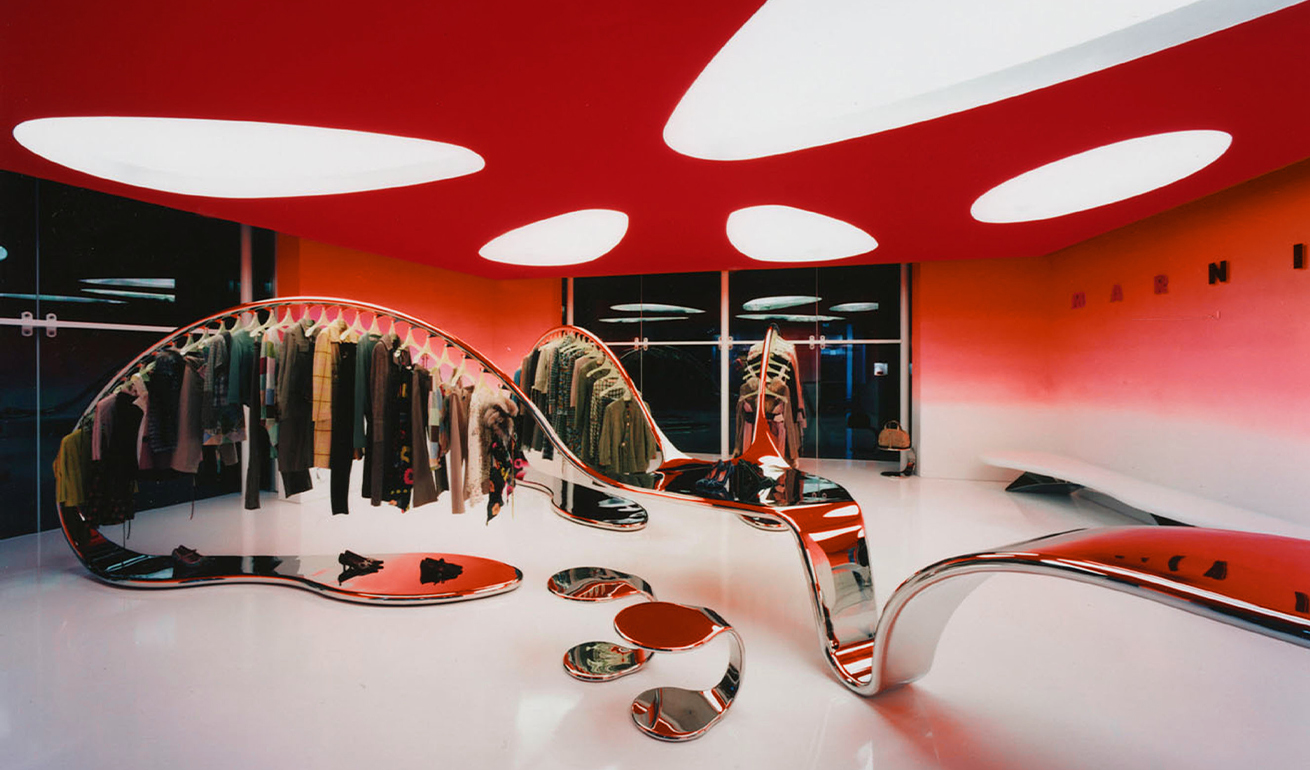
London – Marni’s London flagship became one of the brand’s most recognisable stores, using bold red and white colour blocking as subliminal references to the St George’s flag, London buses and the city’s iconic telephone boxes. A dramatic staircase appeared to stretch the floorplate vertically between levels, while sinuous stainless-steel fixtures connected the two floors in homage to the diplodocus skeleton at the Natural History Museum.
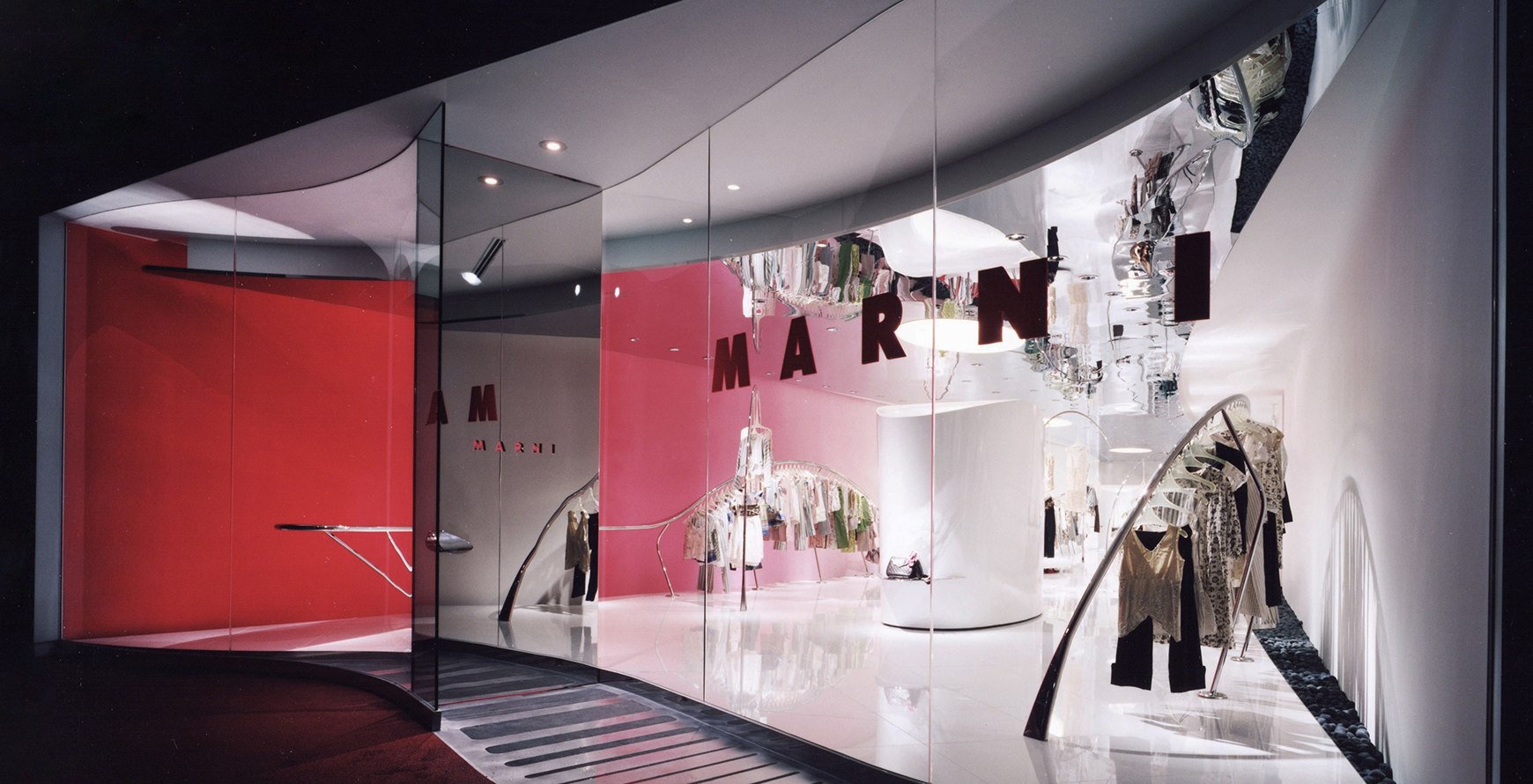
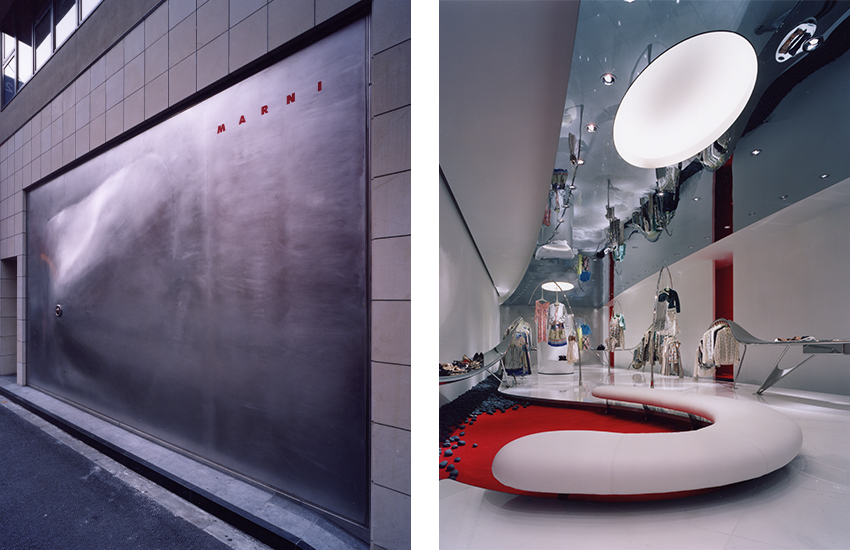
Tokyo – Set within Tokyo’s Aoyama district, the store responded to the visual intensity of the surrounding neon-lit streetscape with an almost entirely closed façade. A sculptural stainless-steel form concealed the interior, punctuated only by a fisheye lens offering a distorted yet cinematic glimpse inside. Customers were invited to journey around the block and enter discreetly from the rear street, transforming arrival into an act of discovery.
“We understood that the Japanese customer is probably the most curious of all of them. And they have no problem with breaking all the rules of retail design by blocking off the façade and having the entrance to the rear. It increased the curiosity and the discovery for the customers.”
— Simon Mitchell, Co-Founder, Sybarite
The Rail – A Signature Architectural Element
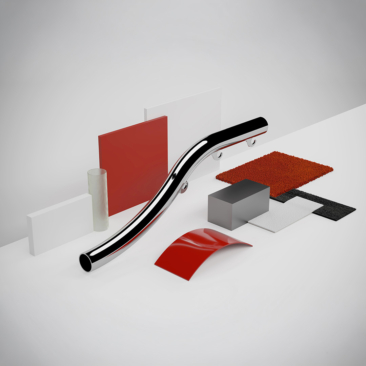
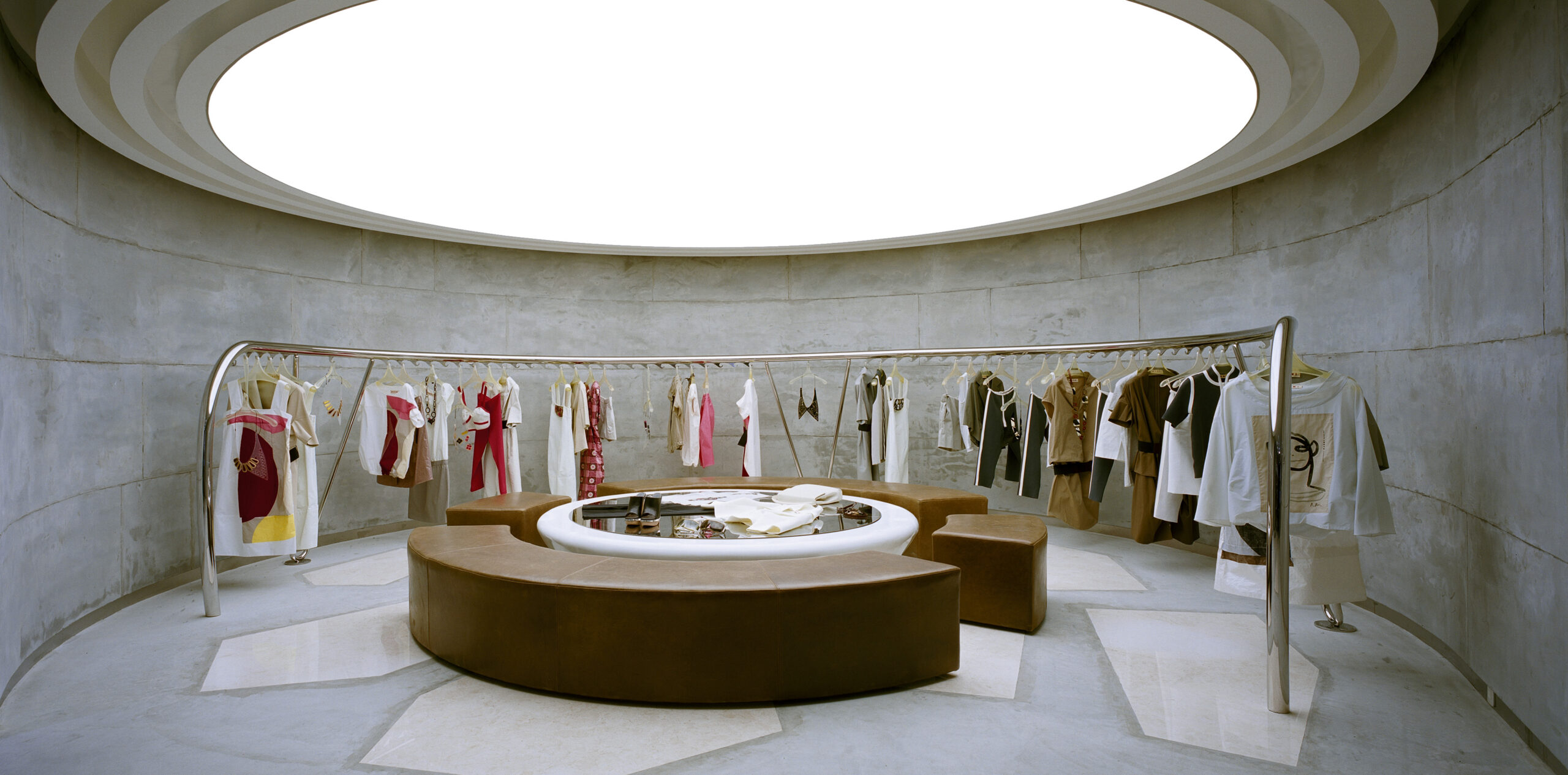
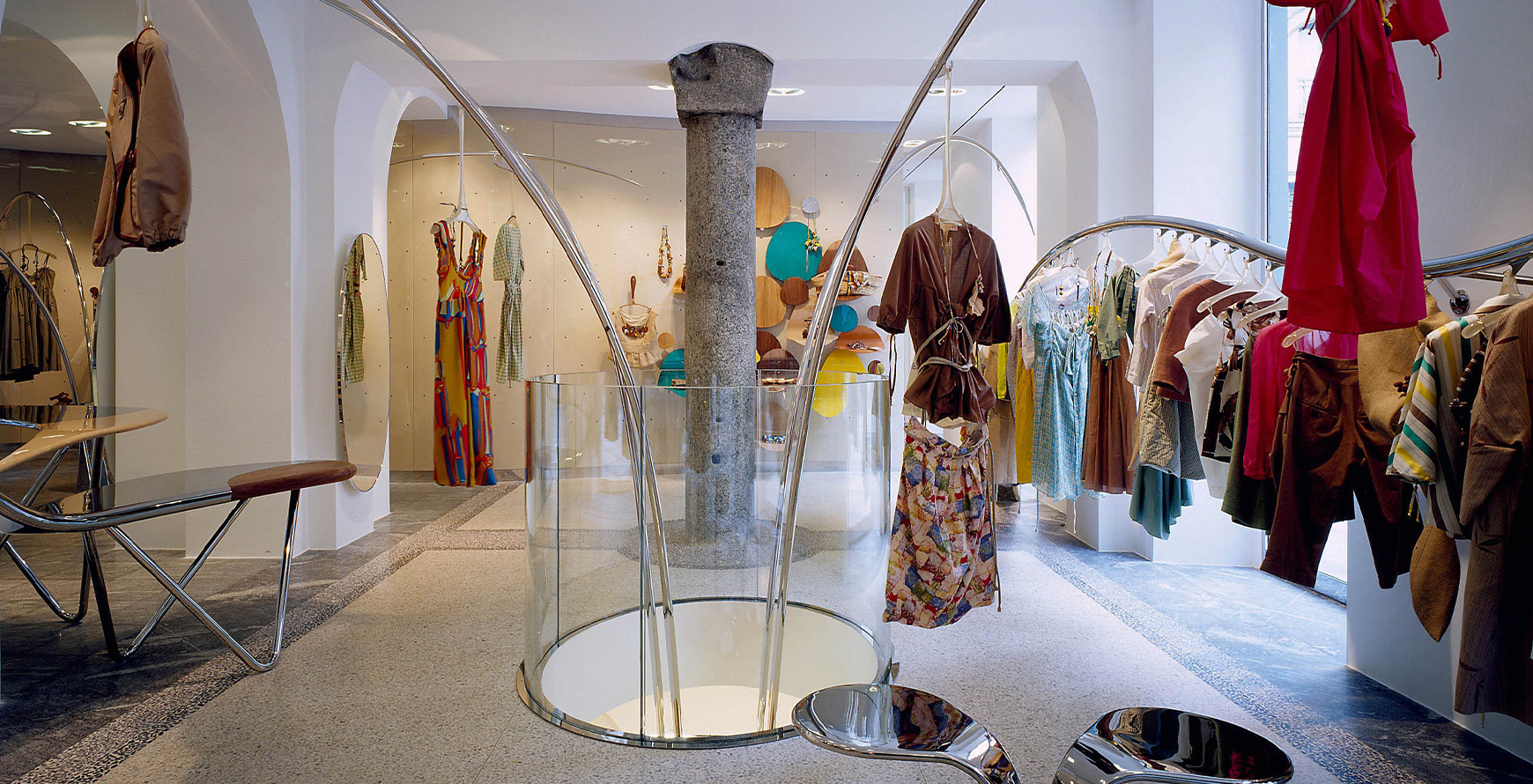
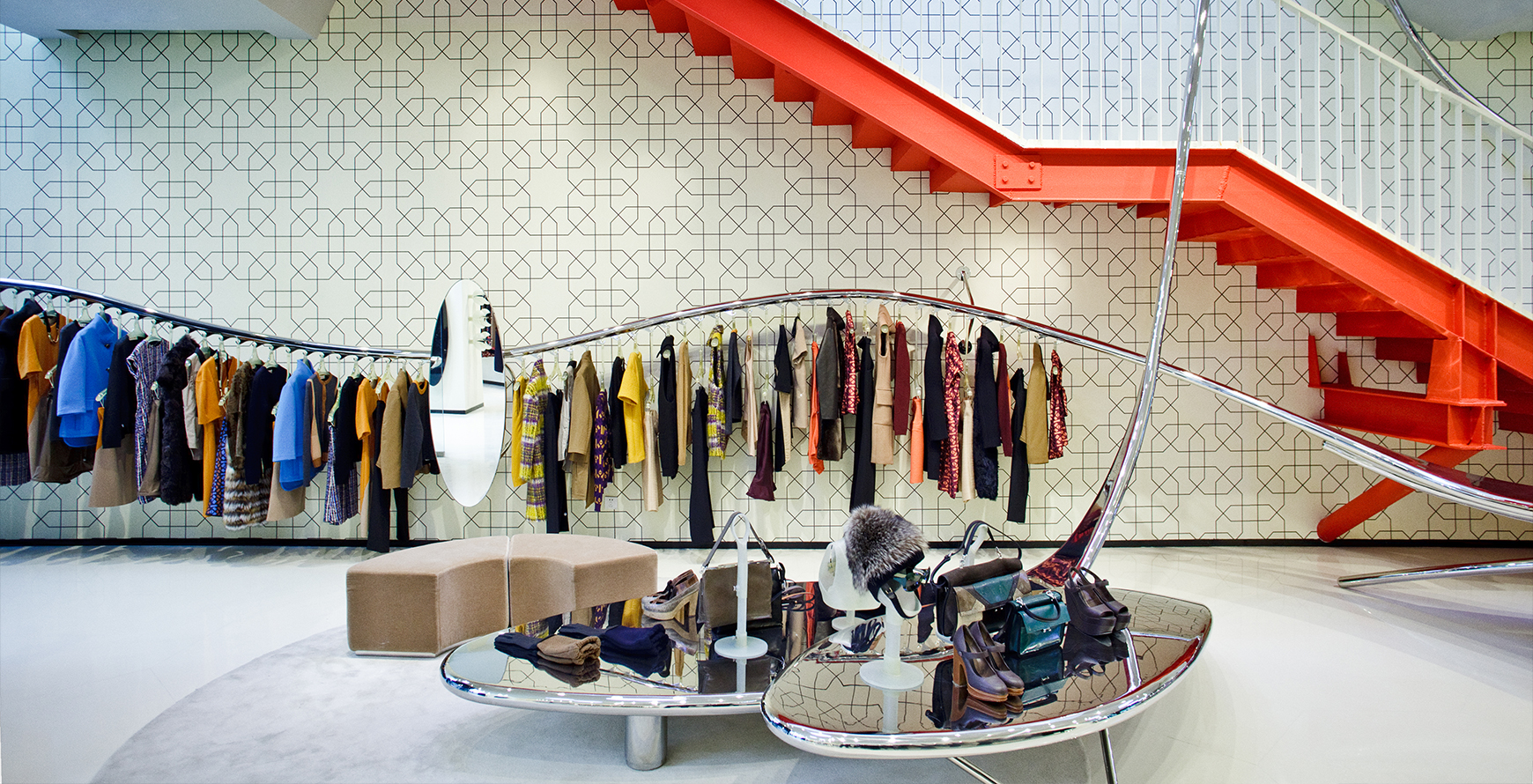
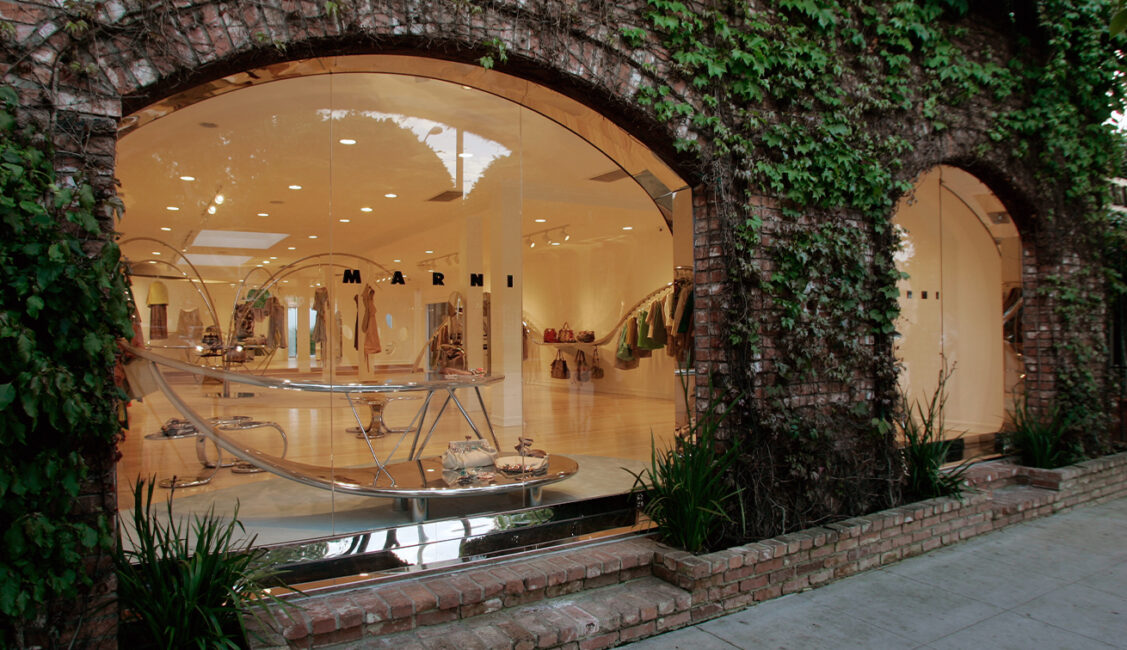
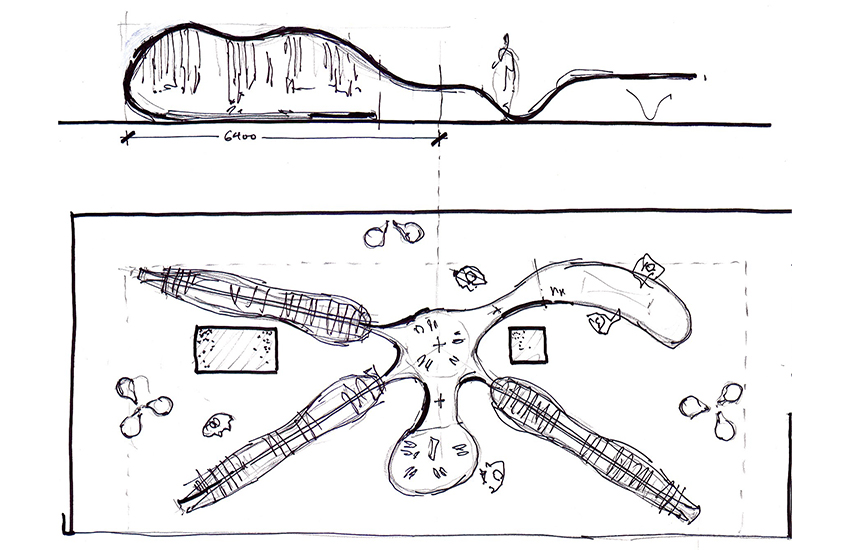
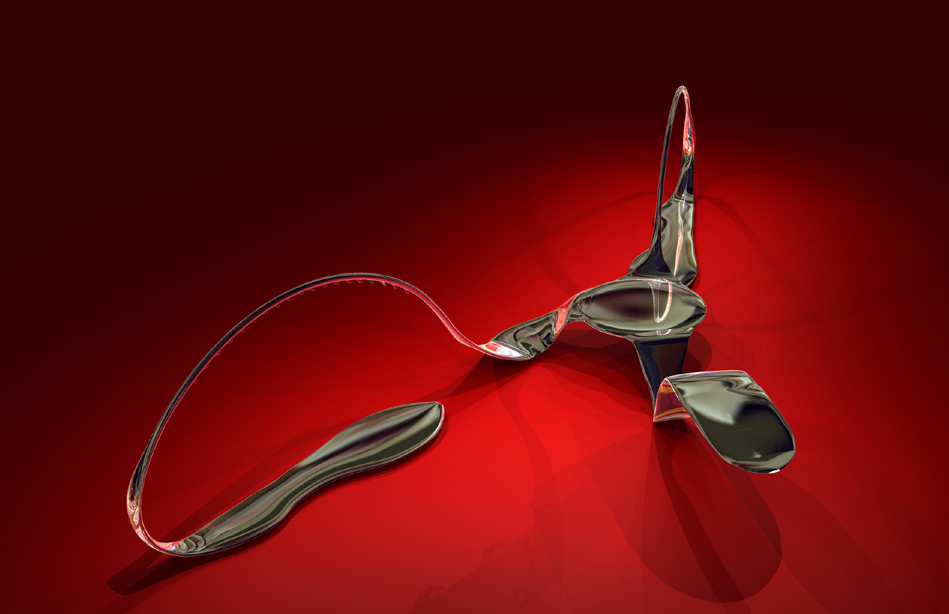
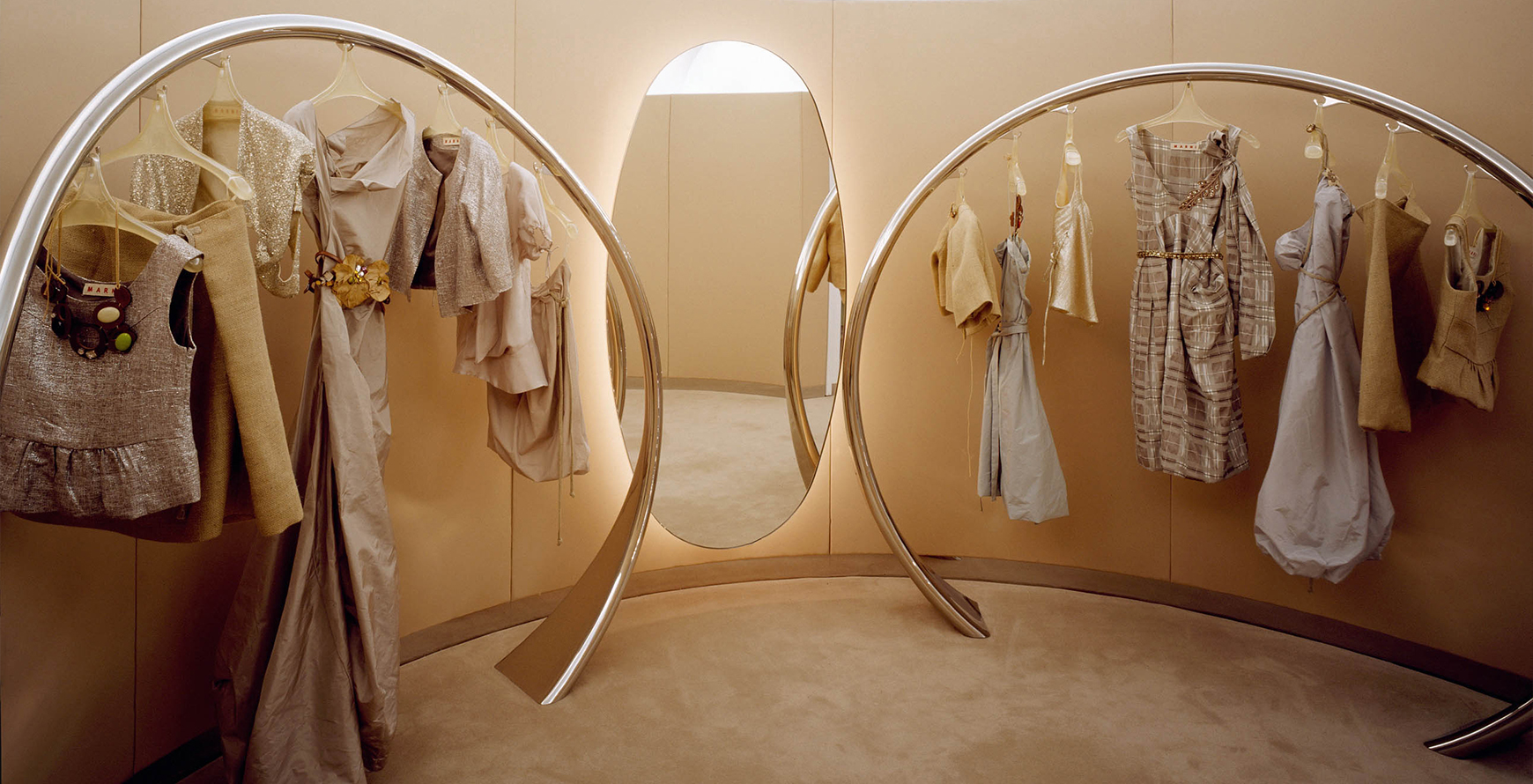
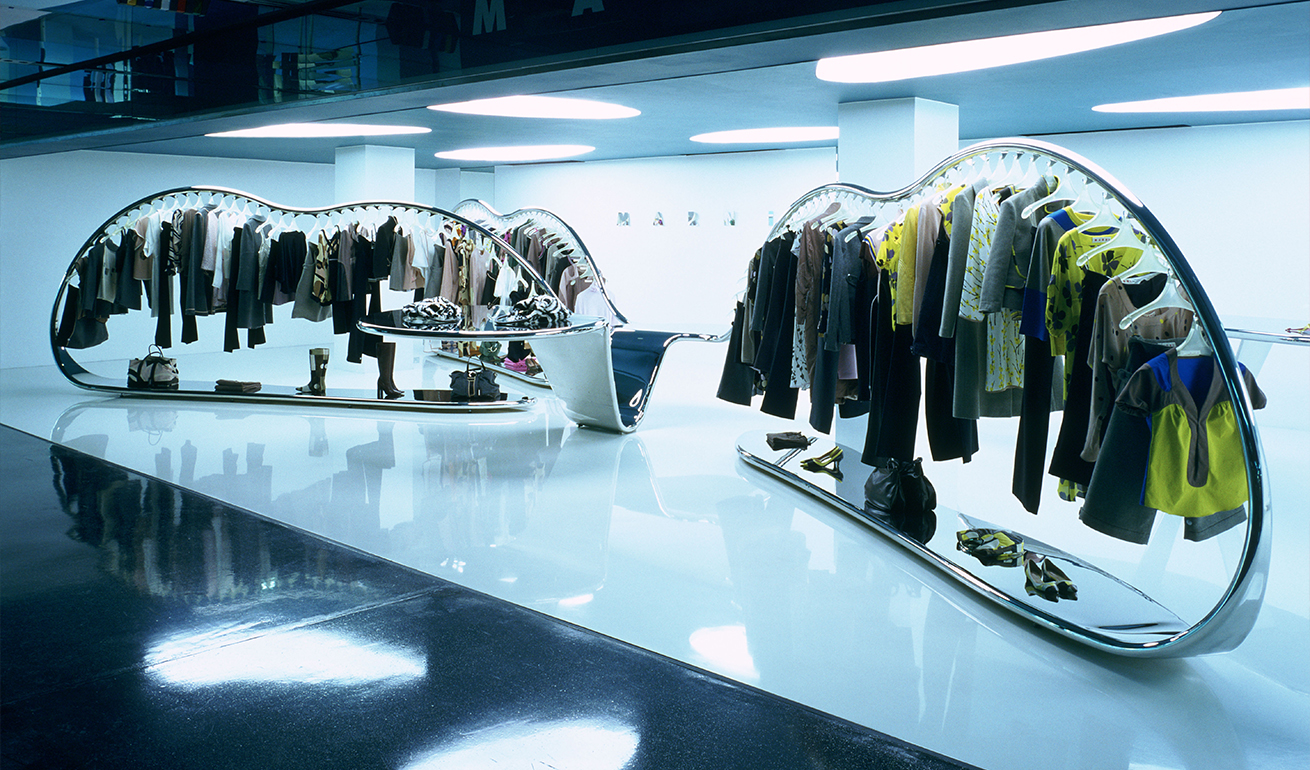
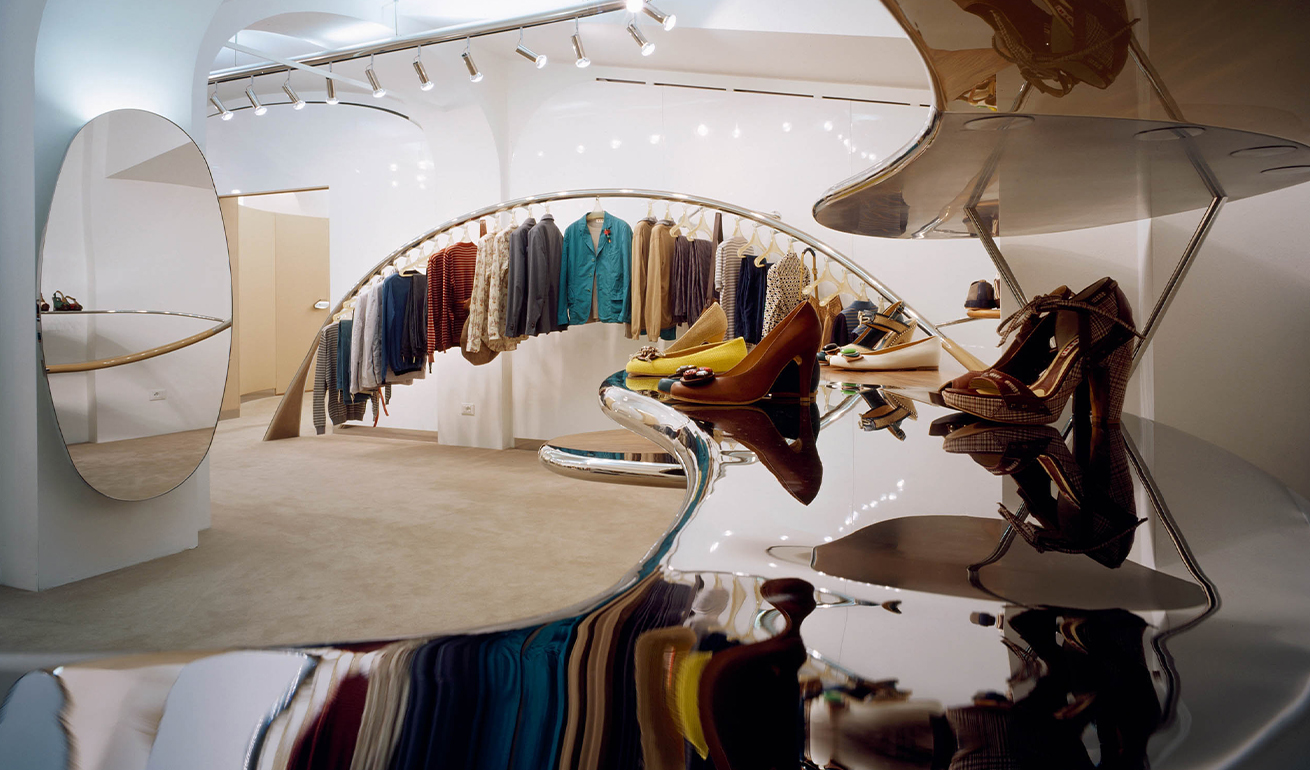
A defining feature across all Marni stores was the sinuous, mirror-polished stainless-steel rail. This sculptural element elegantly framed the collections, reinforcing brand identity with minimal reliance on signage.
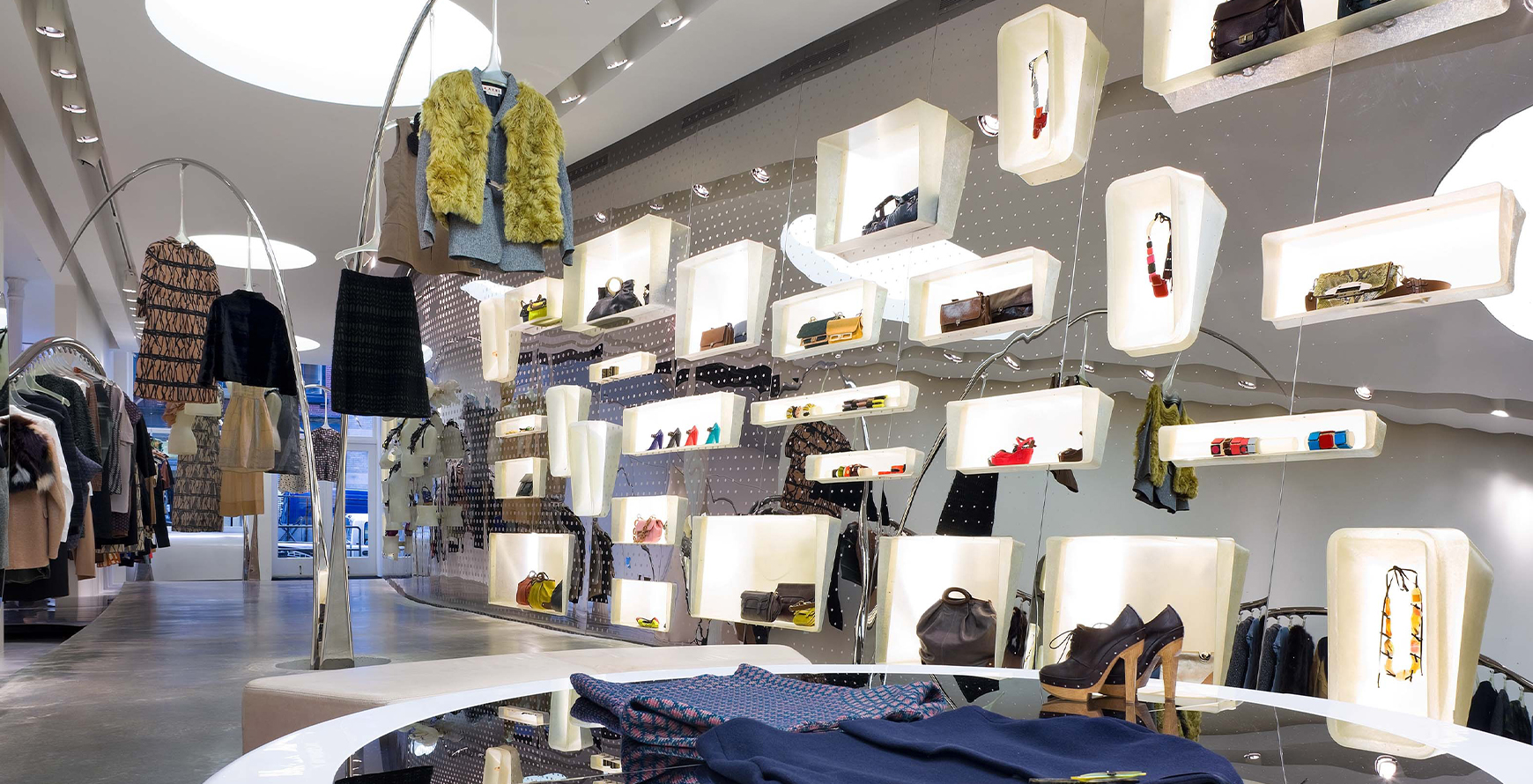
Reinterpreted for each location, the rail became both functional and expressive — extending into displays, vitrines, seating and staircases. Garments were presented as purchasable artworks, supported by custom-designed hangers aligned at precise 250mm intervals.
A consistent kit-of-parts, including fixtures and tables, appeared across the global portfolio, yet was adapted to suit each space, translating Marni’s iconic graphic prints, atypical silhouettes and playful juxtapositions into three-dimensional space.
Conclusion
The evolution of Marni’s retail presence marked a pivotal moment for both the brand and Sybarite. Together, they established a flexible yet cohesive design language that celebrated individuality, cultural context and architectural expression.
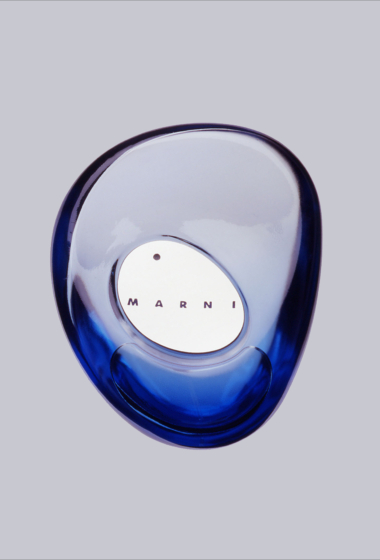
Defined by sculptural curves, bold lines and restrained branding, Marni stores set a new benchmark for experiential luxury retail — a design philosophy that extended from the architecture of its stores to the intimate scale of the Marni perfume bottle. Together, these projects demonstrated how a global identity could be strengthened, rather than diluted, through distinctive and considered design.
More Insights on Our Socials