


Research
Material Mixtape 2.0 – The Anatomy of Leather: From Pasture to Product
A collection of reflections around materiality, making, and innovation.


A collection of reflections around materiality, making, and innovation.
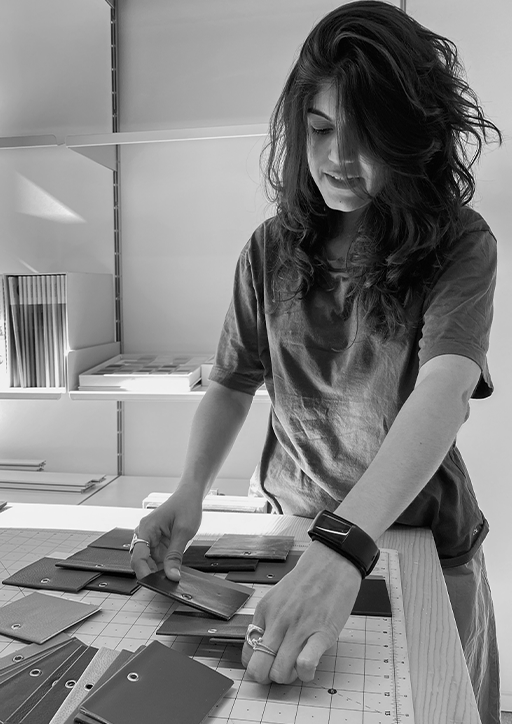
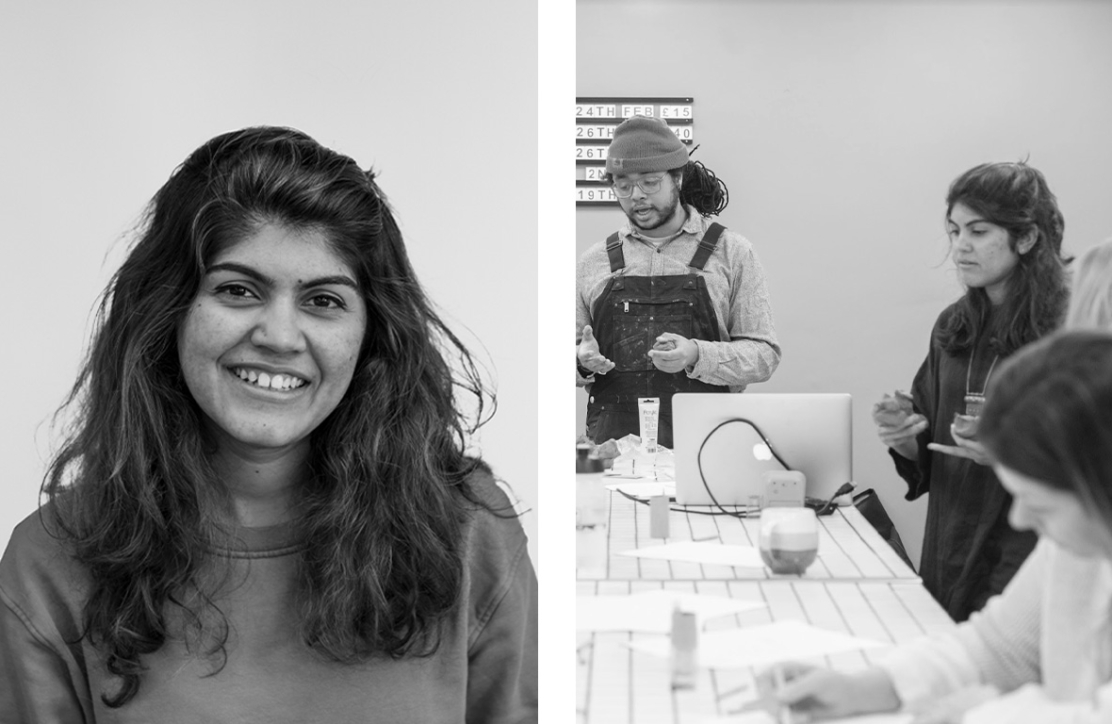
“As designers, we’re trained to evaluate materials by what’s in front of us: appearance, performance, durability and finish. Visiting British Pasture Leather shifted the frame. What struck me most was the extent to which leather quality is inseparable from landscape quality. It was a reminder that every material has a landscape behind it.” — Purva Kundaje, Designer

By following leather’s journey from pasture to product, this issue asks a simple but important question: What gives a material the right to call itself sustainable?
Too often we encounter materials at the point of selection – a sample in a library, a specification, a beautifully finished surface. By then, much of the story has already been edited out.
Perhaps sustainability should be judged not only by how a material performs, but by how well it can explain itself.
What became clear during my visit to British Pasture Leatherwas that sustainability is rarely defined by a single product or process. It is the chain of decisions and relationships that allow a material to exist.

The first question isn’t: What is it made from?
The better question is: What system made it possible?
With British Pasture Leather, the leatheris not understood simply as a surface material. It is the outcome of an interconnected system: certified pasture-fed farms, traceable hides, local abattoirs, UK processors and vegetable tanneries working together to keep value close to its origin.
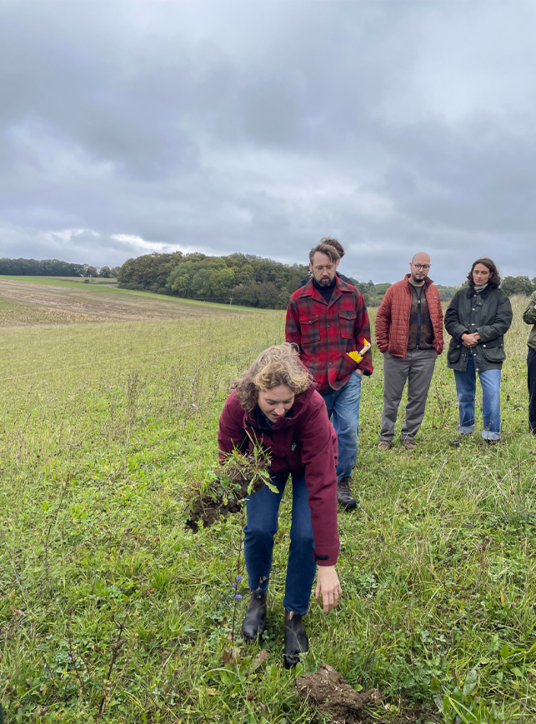
But beneath that system is something even more fundamental: the integrity of the soil.
Healthy soil supports diverse grasslands, managed grazing, water retention, nutrient cycling and biodiversity. It creates the conditions for healthier animals, more resilient landscapes and, ultimately, better leather.
That landscape doesn’t sustain itself. It depends on the knowledge and stewardship of the farmer – reading the land, managing grazing cycles, and working with, rather than against, natural systems.

If we are going to use an animal-derived material, then the sustainability conversation cannot stop at the hide. It must ask what happened to the rest of the animal: meat, bones, fat, organs, blood, hair, horns, hooves, collagen, gelatine, tallow, glycerine, bone meal, blood meal, pet food, medicines, fertilisers and industrial ingredients.
No one selecting leather for a project necessarily wants to ask where the hoof went. It feels excessive. Maybe grotesque. Maybe too much information.
But that discomfort is useful.
A sustainable material methodology should not sanitise the process. It should be able to hold the full chain in view: the farm, the animal, the slaughter, the hide, the tanning, the offcuts, the waste streams and the afterlife.
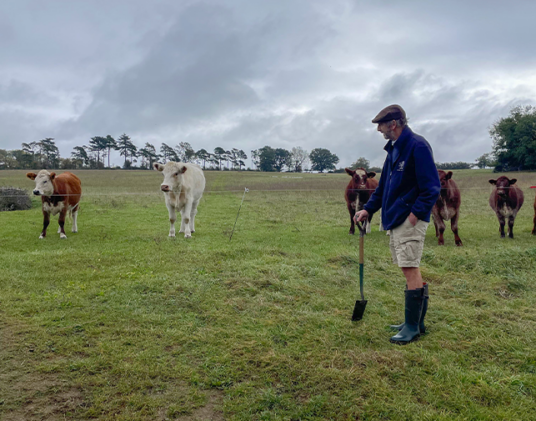
The question is not whether the process is pretty. The question is whether it is accountable.
If the animal has already entered the food system, then wasting the hide becomes its own ethical and environmental problem. Using the hide well – locally, durably and traceably – can become part of a circular logic.
This is not about making the material comfortable. It is about making the material honest.

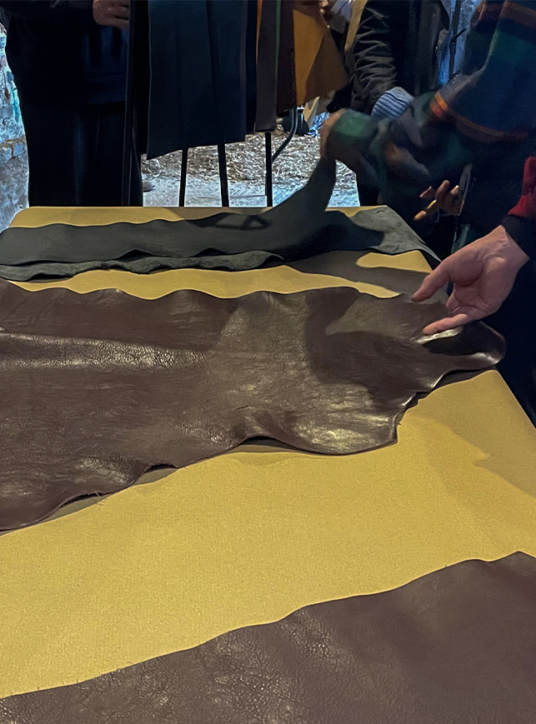
Every hide carries evidence of a unique life.
Unlike many manufactured materials, a hide cannot be standardised.
Its size cannot be predetermined. Its shape cannot be optimised. No two hides are ever the same. Long before it reaches the tannery, its characteristics have already been shaped by the landscape, the animal and the life it has lived.
Scars, bug bites, stretch marks and tonal variation become part of the material’s character. They are not flaws to disguise, but traces of the wild.
If marble veins are celebrated and increase value, why not leather?
Perhaps the question is whether the designer has enough confidence to let the material remain itself.
Imperfection is not failure. It is evidence that the material remained itself.

What has been done to the material to make it desirable?
A material’s sustainability can change dramatically during processing.
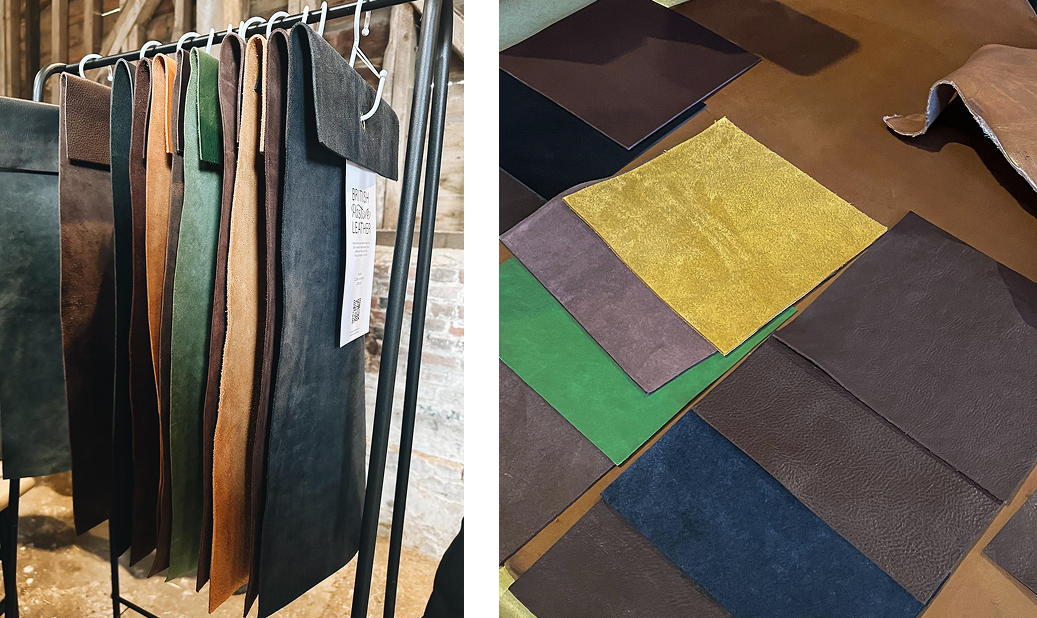
For leather, tanning is one of the most important questions. British Pasture Leather uses vegetable tanning – a slower, plant-based process that avoids chrome and plastic coatings. But this also comes with limitations: fewer colour options, less uniformity, more visible grain and greater natural variation.
So, the question becomes: Are we willing to design with the material’s truth, rather than forcing it to behave like something else?
Vegetable tanning does not give you every colour under the sun. It does not always produce the hyper-even, chemically perfected surface that commercial leather can offer.
But maybe that is the point.
If a material’s sustainability depends on fewer interventions, then perhaps the designer has to meet it halfway.

Perhaps the biggest shift wasn’t learning more about leather. It was learning to ask better questions. As designers, we’re trained to evaluate materials by what’s in front of us: appearance, performance, durability and finish. But understanding a material also means understanding the system that produced it.
If a material arrives perfectly uniform, endlessly customisable and free from visible variation, perhaps the better question isn’t what it offers – but what it needed to become that way.
If the system relies on routine correction – pharmaceuticals, confinement, overfeeding or overgrazing – then the material carries those hidden costs.
Interrogating that system becomes part of the designer’s due diligence.
The role of the designer is no longer simply to select materials. It is to understand the relationships behind them. A material should not only look natural, recycled, low-impact or beautiful. It should be able to withstand questioning.
The more honestly it can explain itself, the stronger its claim. The more it hides, the more we should ask.

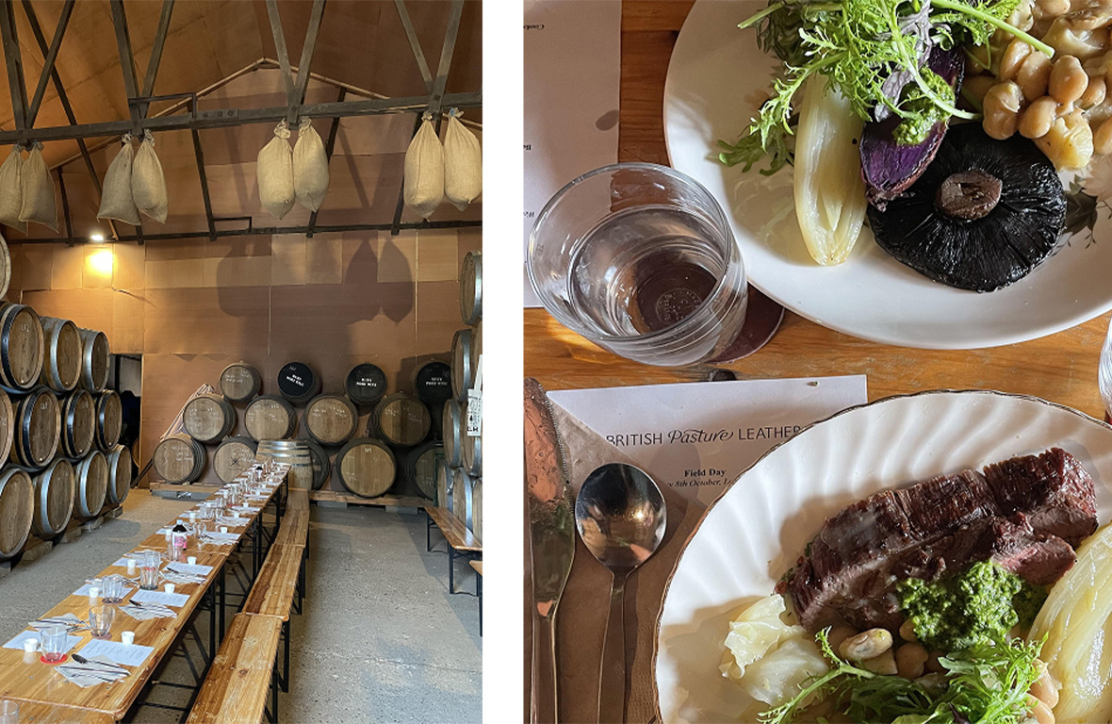
We ended the day around a shared table, eating produce from the very landscape that had shaped every conversation we’d had.
It felt like a fitting conclusion.
The pasture that fed the cattle also nourished the food in front of us. The health of the soil influenced the quality of the grass, the welfare of the animal, the character of the hide and, ultimately, the material we had spent the day discussing. Nothing existed in isolation.
The landscape, the farmer, the animal, the tannery, the designer and the final product were all connected by the same living system.
Perhaps that was the biggest lesson I took away from visiting British Pasture Leather.
We often speak about sustainable materials. Perhaps what we should really be talking about are sustainable relationships – between the landscape, the farmer, the animal, the maker and the designer.
Because when those relationships are healthy, the material becomes an expression of the system that produced it.
Purva is a Designer with a multidisciplinary background spanning architecture, interiors and product design. She studied Architecture at Manipal University before completing an MA in Design Products at the Royal College of Art. Since joining Sybarite in 2022, she has contributed to retail projects across Europe, Asia and the Middle East, combining material research with experience-led design thinking.

"*" indicates required fields